Whole-Home Rewiring for Coastal Los Angeles Homes
replace unsafe old wiring, add grounding, improve circuits, and coordinate walls, panels, permits, and inspection. This page explains symptoms, risks, cost drivers, permit context, the 5-step process, and how to book.
HVACElectricalPlumbingCoastal LA
What this service solves
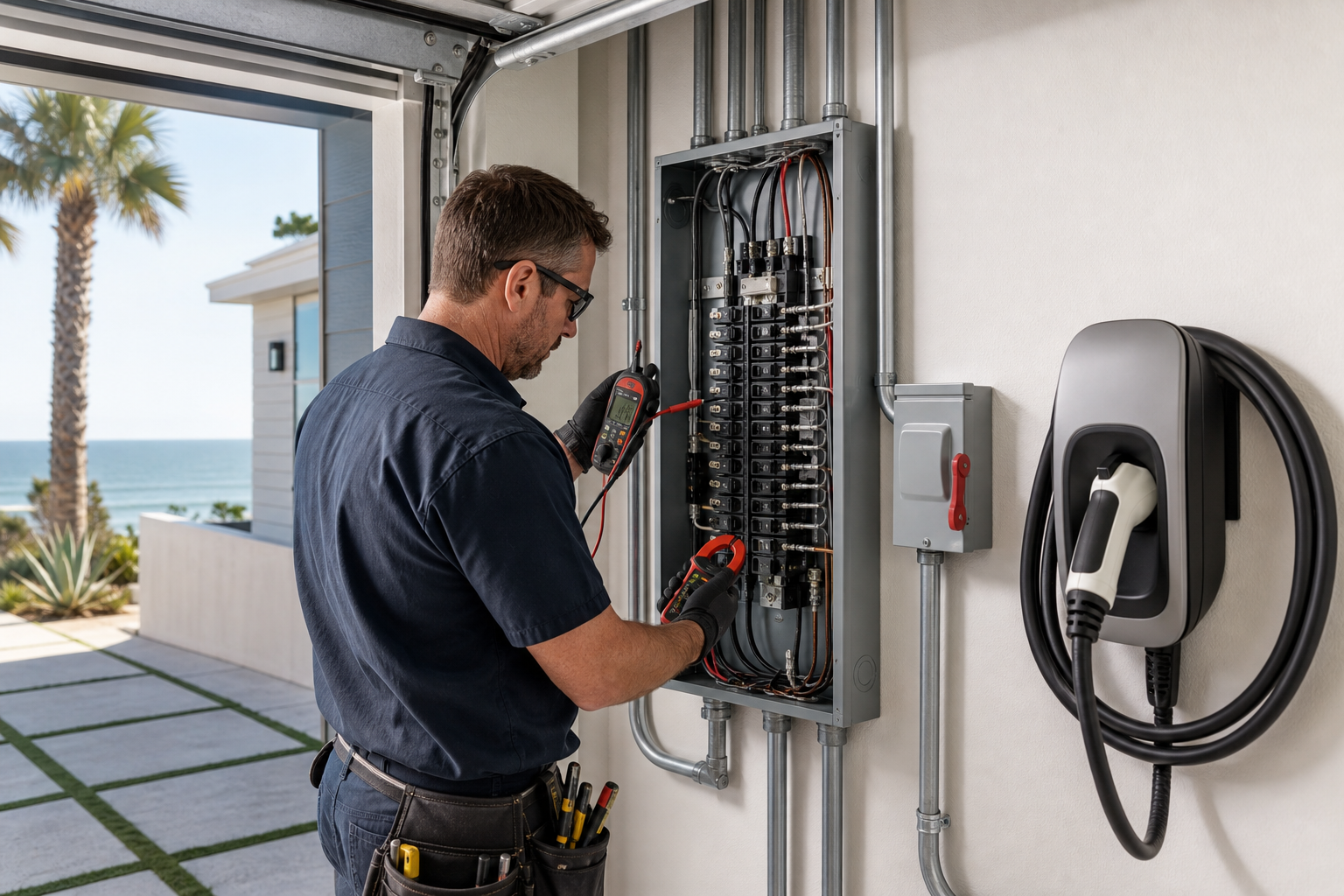
Rewiring is a project, not a small repair; the plan should protect finishes and occupancy. In coastal homes, the visible symptom is only part of the job. The real scope often depends on cloth or old wiring, ungrounded outlets, overloaded circuits, unsafe splices, remodel surprises, plus property access, utility context, permit triggers, and whether a connected trade has to be involved.
For whole-home rewiring, the visit starts with the symptom and works outward through connected systems. Stable issues become repair or replacement plans. Urgent issues get containment and safe shutdown first, then a permanent fix.
Cost and scope drivers in plain English
The planning range is $12 000 to $65 000. Final cost depends on home size, wall access, panel work, patching needs, inspection staging. Access alone can move a quote 20-40% — rooftop equipment, gated entry, hillside staging, or HOA-controlled service all add labor that doesn't show in a standard online price.
Permit and inspection context
Whole-home rewiring normally requires electrical permits, inspection, and careful coordination with walls, finishes, and sometimes panel work. A like-for-like repair, a replacement, a relocation, and remodel-linked alterations all follow different paths. The site links official references because permit rules depend on the address, the authority (LADBS, county, or each beach city's own department), and the final scope.
Our 5-step rewiring process
The 5-step process every coastal LA job goes through. Same sequence, same standards.
- 1. Project planning and phasingWhole-home rewiring is staged room by room or floor by floor to maintain occupancy. Plan, sequence, and timeline established before work starts.
- 2. Permit and inspectionElectrical permit and rough-in inspection scheduled. Some cities require multiple inspection stages.
- 3. Rough-in installationNew wiring pulled through walls, ceilings, and attic. Junction boxes installed, panel circuits assigned.
- 4. Trim-out and device installationOutlets, switches, and devices installed; lighting fixtures connected; final terminations made at panel.
- 5. Final inspection and commissioningFinal electrical inspection, panel labeling, and homeowner walkthrough complete the project.
Where rewiring matters most across coastal LA
Open the city-service pages for local access, utility, and coastal risk detail specific to your neighborhood.
Santa Monica
coastal city with condos, older apartments, bungalows, and strict local permit expectations. Key concern: salt-air corrosion.
Open Santa MonicaNorth of Montana
high-value Santa Monica residential pocket with large remodels and older utility constraints. Key concern: corroded exterior hardware.
Open North of MontanaOcean Park
dense beach-adjacent neighborhood with older rentals, condos, and narrow alleys. Key concern: salt corrosion.
Open Ocean ParkSunset Park
inland Santa Monica neighborhood with older homes and airport-adjacent airflow concerns. Key concern: dust-loaded coils.
Open Sunset ParkBrentwood
large-home and condo market with high replacement expectations and LADWP context. Key concern: old duct systems.
Open BrentwoodVenice
dense coastal LA neighborhood with condos, older homes, rentals, and narrow alleys. Key concern: salt-air corrosion.
Open VeniceMarina del Rey
coastal condo and marina-adjacent market with HOA access and shared utility constraints. Key concern: salt-air corrosion.
Open Marina del ReyWestchester
single-family and small-multifamily market near LAX with older ducts and panels. Key concern: dust-loaded coils.
Open WestchesterDel Rey
mixed LA neighborhood with older homes, apartments, and Ballona Creek context. Key concern: old drains.
Open Del ReyEl Segundo
coastal city with older homes, industrial edges, and local permit routing. Key concern: salt corrosion.
Open El SegundoManhattan Beach
premium beach city with salt exposure, narrow lots, and strict finish protection. Key concern: severe exterior corrosion.
Open Manhattan BeachEl Porto
north Manhattan Beach surf-adjacent pocket with extreme salt exposure and tight lots. Key concern: accelerated corrosion.
Open El Porto
About this guidance
Elena Park, Coastal Trades Planning Lead, oversees the field methodology behind these pages.
Elena Park coordinates HVAC, electrical, and plumbing scopes for Santa Monica Bay and South Bay homes, with field focus on salt-air corrosion, marine-layer moisture, condo and HOA access, narrow side yards, panel capacity for heat pumps and EV chargers, tankless and tank water-heater constraints, sewer and drain access, and permit-aware multi-trade planning.
Related services
Electrical Panel Upgradeplan safer capacity for heat pumps, EV chargers, tankless loads, remodels, and old coastal panelsEV Charger Installationinstall EV charging with load calculation, panel capacity, garage routing, HOA rules, and SCE or LADWP contextBreaker and Circuit Repairdiagnose tripping breakers, overloaded appliance circuits, wet exterior devices, and unsafe wiring symptomsOutlet, Switch, and GFCI Repairrepair dead outlets, failed GFCIs, switches, exterior covers, wet locations, and beach-house corrosion pointsLighting Installationinstall recessed, exterior, security, landscape, and remodel lighting with safe circuits and coastal-rated hardwareDedicated Circuitsadd safer circuits for HVAC, appliances, microwaves, tankless equipment, home offices, and garage loads
FAQ
Short answers for homeowners comparing urgency, access, price, and inspection risk.
What is the first step for rewiring?
Take five photos: a wide shot of the equipment, the data plate, the panel or shutoff, the access path, and any visible corrosion or staining. Then describe whether the symptom involves cloth or old wiring, ungrounded outlets, overloaded circuits.
What drives whole-home rewiring cost?
home size, wall access, panel work, patching needs, inspection staging. The single largest variable is usually access — rooftop, gated, hillside, or HOA-controlled equipment adds time and coordination that show up in the labor line.
Do I need a permit?
Whole-home rewiring normally requires electrical permits, inspection, and careful coordination with walls, finishes, and sometimes panel work.
Which coastal details matter most for this service?
Salt exposure on outdoor metal, access path including parking and gates, panel or shutoff location, HOA rules where applicable, utility provider (SCE vs LADWP), and whether the work is repair, replacement, or inspection-only.
What's the planning price range for rewiring?
$12 000 to $65 000 for most coastal LA scopes. Diagnostic visits are billed separately at $185 and applied as credit toward approved repair work.
Can I add an EV charger without upgrading my panel?
Often yes, with load management. A 200A panel typically supports a 48A charger plus normal household load. 100A panels usually need either load management or service upgrade for chargers above 32A.
What's the difference between AFCI and GFCI breakers?
GFCI protects against shock hazard (current flowing where it shouldn't). AFCI protects against fire hazard (intermittent arcing inside walls). Many circuits in modern homes need both, available as combined dual-function breakers.
Why does coastal Los Angeles equipment fail faster?
Salt-air deposition accelerates corrosion on metal components by 3-5x compared to inland Los Angeles. Equipment within 1 mile of the coast typically has 30-50% shorter service life unless installed with marine-grade materials.
Do you charge for the diagnostic visit?
Yes. The diagnostic fee is $185 for most non-emergency calls and is applied as credit toward any repair work approved that day. Emergency rates apply outside business hours.
What Coastal LA Homeowners Say
Verified visible reviews. The same review text is referenced in this page's structured data.
★★★★★
Cul-de-sac off Slauson, 1962 hillside ranch. Repiping the hot side from galvanized to PEX — we'd had three pinhole leaks in nine months. Bayline phased the work over four days so we kept water in either the kitchen or the bathrooms most of the time. Pressure test passed first try.
★★★★★
Townhouse, GE Profile dishwasher, slow leak under the sink that had been wicking into the cabinet floor for who knows how long. They replaced the angle stop, the supply line, and the disposal flange (which was rusted) in one visit. Cleaned up after themselves.
★★★★★
Mid-century home near the airport edge. Recurring drain clogs from accumulated grease and dust. Bayline hydro-jetted the kitchen line, verified with camera, and recommended a maintenance interval. Tech told me what NOT to put down the disposal which actually helped.
Authoritative references used
These pages inform permit, utility, safety, equipment, water, sewer, and efficiency context. Exact requirements still depend on address and final scope.
LADBS plan check and permit
City of Los Angeles addresses can require LADBS context for mechanical, electrical, plumbing, and building-safety scopes.
LADBS express permits
Some simple residential MEP scopes may be eligible for streamlined permit handling, while replacements and alterations need address-specific review.
LADBS inspections
City of Los Angeles MEP work can require trade inspection sequencing before work is covered, energized, or finalized.
Los Angeles County Building and Safety
Unincorporated coastal areas and county-served pockets may use LA County Building and Safety workflows.
LADWP residential electric service
Los Angeles neighborhoods such as Venice, Westchester, Playa del Rey, Brentwood, Pacific Palisades, and parts of the Westside can involve LADWP.
Southern California Edison residential services
Many South Bay and beach-city addresses use SCE electric service, relevant to panels, EV chargers, heat pumps, and outages.
SCE Charge Ready Home
EV charger planning can involve panel capacity, load management, utility coordination, and rebate eligibility.
SoCalGas natural gas leak safety
Gas odor and gas-appliance safety are urgent for furnaces, water heaters, dryers, ranges, and gas-line concerns.
California Energy Commission building energy standards
California energy standards affect HVAC replacement, heat pumps, duct work, and electric-ready planning.
Book whole-home rewiring with photos.
A better first note leads to a better visit window, better parts planning, and fewer quote surprises.