Emergency Plumbing in Venice
stabilize active leaks, backups, water-heater failures, sewer overflows, failed shutoffs, and water near electrical systems. This local page explains Venice access, utility, permit, cost, checklist, and emergency context before you book.
HVACElectricalPlumbingCoastal LA
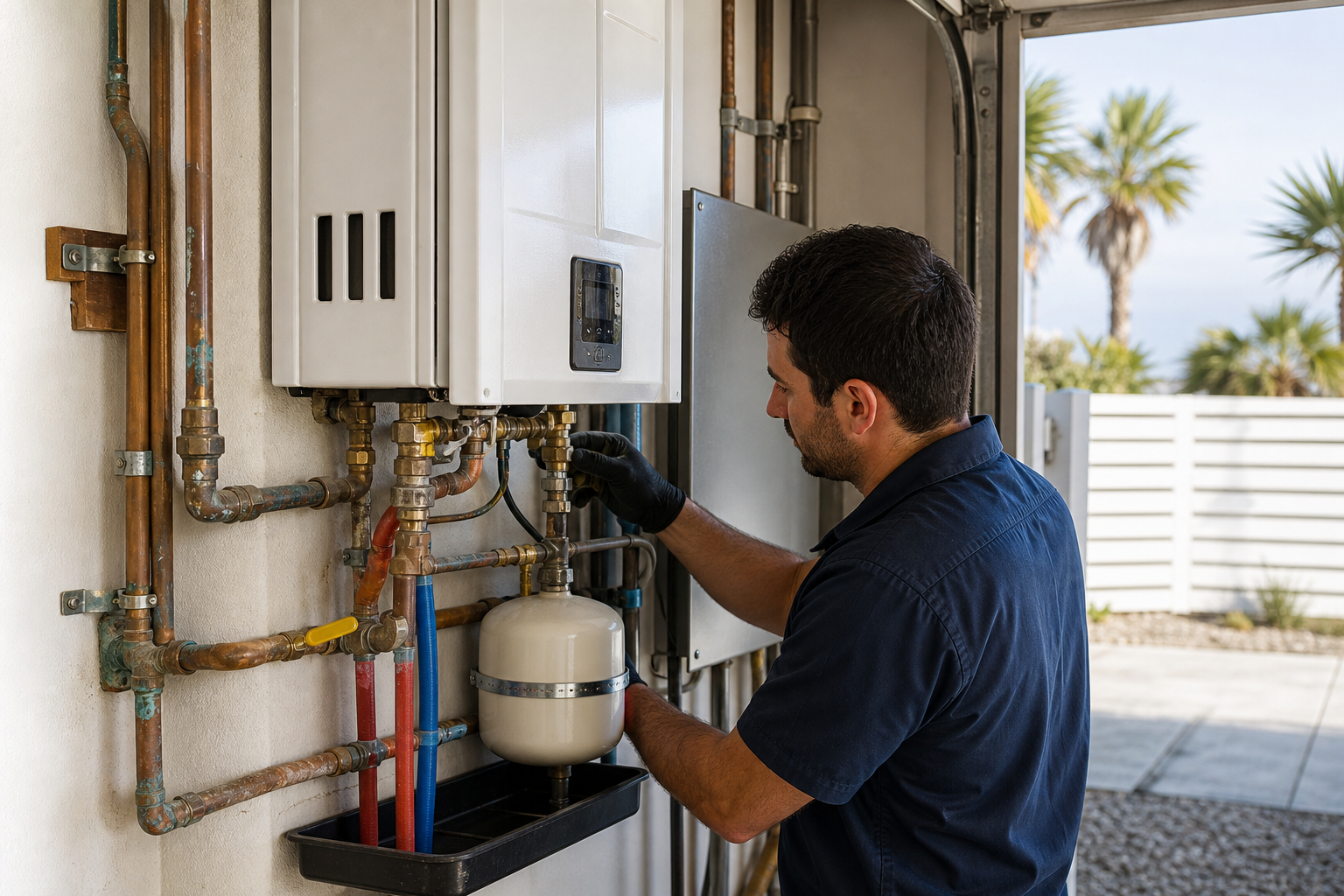
Quick answer for Venice
Emergency Plumbing in Venice should start with a clear symptom, a photo-based access plan, and a realistic view of what can expand the scope. The visible issue may be active leak, sewer backup, failed shutoff, but the job can change when the property adds alley access, shared shutoffs, roof or closet equipment, tight side yards, parking limitations. In beach bungalows, the technician may need to reach equipment, a panel, drain, shutoff, cleanout, garage, attic, side yard, roof, or utility closet before the actual repair begins.
The best first move is to book through the approved external scheduler and add photos. If the symptom involves no cooling in heat, active leaking, gas odor, burning smell, a wet panel, repeated breaker trips, a sewer backup, or water heater failure, treat it as urgent. If the symptom is stable, the same details help plan repair, replacement, or inspection-oriented pricing without forcing an emergency visit.
One-sentence answer
For Venice emergency plumbing, send photos of turn off water if safe, send leak photos, note affected fixtures and flag salt-air corrosion, active leak, or alley access before scheduling.
Why this service is different in Venice
Venice sits in the Santa Monica Bay cluster and is best understood as a dense coastal LA neighborhood with condos, older homes, rentals, and narrow alleys. Local anchors such as Abbot Kinney, Venice Canals, Rose Avenue, Lincoln Boulevard, Ocean Front Walk sit near housing types that include beach bungalows, small apartments, condos, newer townhomes, converted garages. Those details matter because the same emergency plumbing call can require different ladder access, side-yard clearance, panel review, water shutoff mapping, HOA permission, parking, or inspection sequencing depending on the property.
Utility context matters too: City of Los Angeles addresses often involve LADWP for electric service, LADBS for permits, and SoCalGas for gas-appliance safety unless the exact address proves otherwise. Permit context: LADBS permit context applies for City of Los Angeles addresses; beach-adjacent equipment and shared buildings need extra planning. For this service, the general permit lens is: Emergency stabilization is immediate, but permanent pipe, sewer, water-heater, or gas-related repairs can require permits and inspection. That does not mean every diagnostic call is a permit project. It means the homeowner should separate a contained repair from replacement, new circuits, equipment relocation, gas or venting changes, sewer repair, repiping, or remodel-linked work.
Common failure modes
The common emergency plumbing risks include active leak, sewer backup, failed shutoff, water heater rupture, water near electrical equipment. In Venice, local conditions such as salt-air corrosion, wet exterior disconnects, drain sand, old panels, water heater closet leaks can make the issue more urgent or more expensive. A cooling complaint can be airflow, condensate, electrical, refrigerant, or corrosion. A panel or circuit issue can be load, grounding, water exposure, or future equipment capacity. A plumbing problem can be local, shared, hidden, under-slab, inside a wall, or connected to a public/private sewer responsibility question.
Do not keep resetting breakers, running water into a backed-up drain, using a leaking water heater, or operating equipment that smells hot, wet, or unsafe. Those actions can turn a smaller service call into broader property damage. Document the symptom, isolate what you safely can, and send the details through the scheduler.
Venice address-level field memo
beach bungalows, townhomes, rentals, small apartments, canals-adjacent properties, and converted garages create tight access and shared-building variables. For this page, the working scenario is beach bungalows near Venice Canals with roof or closet equipment and water heater rupture. That scenario is not invented as a completed job; it is the kind of address-level condition the scheduler should clarify before Bayline commits to the visit plan.
Alley access, visitor parking, wet exterior equipment, drain sand, and LADBS context can change the visit before tools come out. The common wrong assumption is: assuming the visible symptom is the whole job. A stronger request tells Bayline what failed, where it sits, who controls access, whether the symptom is active, and what other system could be affected.
Emergency Plumbing field playbook for Venice
- Do not diagnose fully before containment. Stop active water, isolate failed shutoffs, protect electrical areas, and identify whether sewage or a water heater is involved.
- Escalate when water reaches electrical equipment, sewage backs up, a tank ruptures, or a shutoff does not hold.
- Quote risk rises when emergency stabilization becomes pipe repair, water-heater replacement, sewer work, or remediation coordination.
For emergency plumbing, the first ten minutes should answer whether the work is safe to continue, whether access is clear, whether the symptom is isolated, and whether repair parts and scope or salt-air corrosion changes the quote. That extra discipline is what separates a useful local service page from a thin city-name swap.
Decision evidence for emergency plumbing in Venice
This table adds page-specific data points for homeowners comparing repair, replacement, emergency, inspection, and cost intent.
| Evidence | What to capture | Why it changes the job |
|---|---|---|
| First proof point | Useful evidence includes alley and gate photos, garage or rooftop equipment photos, canal or beach exposure notes, panel photos, and shared shutoff rules. | Use it to decide whether emergency plumbing stays diagnostic or becomes a larger scope. |
| Local friction | Alley access, visitor parking, wet exterior equipment, drain sand, and LADBS context can change the visit before tools come out. | This can change arrival timing, parts planning, and whether another trade is needed. |
| Service-specific check | Do not diagnose fully before containment. Stop active water, isolate failed shutoffs, protect electrical areas, and identify whether sewage or a water heater is involved. | This protects the homeowner from paying for the wrong first fix. |
| Escalation trigger | Escalate when water reaches electrical equipment, sewage backs up, a tank ruptures, or a shutoff does not hold. | This is where emergency, replacement, permit, or inspection planning can enter. |
| Quote risk | Quote risk rises when emergency stabilization becomes pipe repair, water-heater replacement, sewer work, or remediation coordination. | This is the difference between a useful estimate and a vague low anchor. |
Questions that prevent doorway-style guessing
- Which utility serves the address and does that affect emergency plumbing?
- Does Venice route this scope through a city, county, HOA, or building manager process?
- Is this a like-for-like repair, a replacement, a relocation, or work tied to a remodel?
- Could the visible issue involve another trade such as electrical capacity, gas, venting, drainage, or water damage?
If the answer to any question is unclear, the page should push the homeowner toward documentation instead of pretending every Venice address behaves the same. Emergency Plumbing can be straightforward, but it becomes a different job when shared shutoffs, failed shutoff, or cleanout location is present.
Cost drivers in Venice
Cost is driven by diagnosis, scope, access, and safety risk more than the service label.
| Driver | Why it matters | Prep step |
|---|---|---|
| after-hours urgency | after-hours urgency can change parts, labor, inspection, and whether the job stays repair-only. In Venice, alley access or salt-air corrosion can alter the plan. | Send photos, note access, and list who controls panels, gates, shutoffs, cleanouts, or HOA work windows. |
| damage containment | damage containment can change parts, labor, inspection, and whether the job stays repair-only. In Venice, shared shutoffs or wet exterior disconnects can alter the plan. | Send photos, note access, and list who controls panels, gates, shutoffs, cleanouts, or HOA work windows. |
| shutoff access | shutoff access can change parts, labor, inspection, and whether the job stays repair-only. In Venice, roof or closet equipment or drain sand can alter the plan. | Send photos, note access, and list who controls panels, gates, shutoffs, cleanouts, or HOA work windows. |
| cleanout location | cleanout location can change parts, labor, inspection, and whether the job stays repair-only. In Venice, tight side yards or old panels can alter the plan. | Send photos, note access, and list who controls panels, gates, shutoffs, cleanouts, or HOA work windows. |
| repair parts and scope | repair parts and scope can change parts, labor, inspection, and whether the job stays repair-only. In Venice, parking limitations or water heater closet leaks can alter the plan. | Send photos, note access, and list who controls panels, gates, shutoffs, cleanouts, or HOA work windows. |
Repair, replacement, or inspection path
Repair makes sense when the failure is contained, parts are available, equipment is otherwise serviceable, access is clear, and safety risk is low. Replacement becomes more responsible when the equipment is failing repeatedly, the repair cost approaches the value of replacement, the system is unsafe, old coastal exposure has damaged major components, or the connected trade scope cannot be ignored.
Inspection-oriented work is useful when buying, selling, remodeling, planning an EV charger, adding a heat pump, replacing a water heater, converting equipment, or trying to understand whether a shared building system is involved. The deliverable is clarity: what exists now, what is unsafe, what can be repaired, what should be replaced, what may require a permit, and what another trade should review before money is committed.
What can go wrong if the scope is guessed
Guessing can lead to the wrong part, wrong equipment size, missed corrosion, unsafe circuit, unplanned HOA denial, failed inspection, return visit, water damage, or a quote that expands after the home is already opened. In Venice, that risk is higher when venice pages should be sharp about access, salt air, and shared building constraints. The job note should include turn off water if safe, send leak photos, note affected fixtures, clear cleanout access, protect electrical areas plus whether alley access or shared shutoffs changes timing.
Send details for emergency plumbing in Venice.
The scheduler should include symptoms, photos, urgency, access, and whether another HVAC, electrical, or plumbing system may be involved.
Related decisions
Emergency Plumbing service pageEmergency plumbing is about containment first, then a durable repair path.Venice service areaVenice pages should be sharp about access, salt air, and shared building constraints.Tankless vs Tank Water Heaters in Coastal Garages, Condos, and Utility ClosetsHow gas, venting, condensate, electrical, space, and maintenance access decide the better water-heater path.Water Heater Repair and Replacement in Venicerepair leaks, ignition issues, age-related failures, venting problems, drain pans, shutoffs, and coastal garage corrosionTankless Water Heater Installation in Veniceplan gas, venting, condensate, electrical outlet, clearance, and salt-air exterior exposure before installing tanklessDrain Cleaning in Veniceclear kitchen, bath, laundry, floor drain, and main-line clogs while checking sand, grease, roots, and old pipe conditionSewer Line Inspection and Repair in Veniceinspect roots, bellies, breaks, cleanout access, private lateral responsibility, and coastal soil or hillside routingEmergency Plumbing in Ocean Parkdense beach-adjacent neighborhood with older rentals, condos, and narrow alleys. Concern: salt corrosion.Emergency Plumbing in Marina del Reycoastal condo and marina-adjacent market with HOA access and shared utility constraints. Concern: salt-air corrosion.Emergency Plumbing in Playa del Reybeach and bluff neighborhood with older homes, condos, and salt exposure. Concern: salt corrosion.Emergency Plumbing in Del Reymixed LA neighborhood with older homes, apartments, and Ballona Creek context. Concern: old drains.Emergency Plumbing in Santa Monicacoastal city with condos, older apartments, bungalows, and strict local permit expectations. Concern: salt-air corrosion.
FAQ
Short answers for homeowners comparing urgency, access, price, and inspection risk.
How fast should I book emergency plumbing in Venice?
Book quickly if the symptom involves active leak or sewer backup. In Venice, urgency also rises when salt-air corrosion could affect safety, damage, or connected systems.
What should I prepare before emergency plumbing?
Prepare turn off water if safe, send leak photos, note affected fixtures, clear cleanout access. For Venice, also confirm alley access, shared shutoffs, roof or closet equipment.
What drives emergency plumbing cost in Venice?
The major drivers are after-hours urgency, damage containment, shutoff access, cleanout location, repair parts and scope. Local cost can change when alley access, salt-air corrosion, or marine layer slows access or expands scope.
Can emergency plumbing require permits or inspections?
Emergency stabilization is immediate, but permanent pipe, sewer, water-heater, or gas-related repairs can require permits and inspection. Local context: LADBS permit context applies for City of Los Angeles addresses; beach-adjacent equipment and shared buildings need extra planning.
Where does booking happen?
Every booking CTA points to https://nexfield.pro/crm/book?u=205; there is no fake internal booking form.
Visible reviews for emergency plumbing pages
These visible notes match the reviewBody text used in JSON-LD for this page.
★★★★★
For a Redondo Beach drain backup, the crew separated a local clog from a possible main-line issue and gave us the cleanout checklist for future calls.
★★★★★
In Palos Verdes, access matters. Bayline asked about gate codes, driveway slope, and water pressure before scheduling the water heater and panel review.
★★★★★
Bayline treated our Santa Monica condo like an access problem first, not just a water heater swap. They asked for the elevator rules, closet photos, and shutoff details before the visit.
Authoritative references used
These pages inform permit, utility, safety, equipment, water, sewer, and efficiency context. Exact requirements still depend on address and final scope.
LADBS plan check and permit
City of Los Angeles addresses can require LADBS context for mechanical, electrical, plumbing, and building-safety scopes.
LADBS express permits
Some simple residential MEP scopes may be eligible for streamlined permit handling, while replacements and alterations need address-specific review.
LADBS inspections
City of Los Angeles MEP work can require trade inspection sequencing before work is covered, energized, or finalized.
Los Angeles County Building and Safety
Unincorporated coastal areas and county-served pockets may use LA County Building and Safety workflows.
LADWP residential electric service
Los Angeles neighborhoods such as Venice, Westchester, Playa del Rey, Brentwood, Pacific Palisades, and parts of the Westside can involve LADWP.
Southern California Edison residential services
Many South Bay and beach-city addresses use SCE electric service, relevant to panels, EV chargers, heat pumps, and outages.
SCE Charge Ready Home
EV charger planning can involve panel capacity, load management, utility coordination, and rebate eligibility.
SoCalGas natural gas leak safety
Gas odor and gas-appliance safety are urgent for furnaces, water heaters, dryers, ranges, and gas-line concerns.
California Energy Commission building energy standards
California energy standards affect HVAC replacement, heat pumps, duct work, and electric-ready planning.