Furnace Repair in Rolling Hills
diagnose ignition, airflow, venting, gas odor, limit switch, and carbon monoxide risk without ignoring coastal corrosion. Real local context for Rolling Hills access, utility, permit, cost, and emergency conditions.
HVACElectricalPlumbingCoastal LA
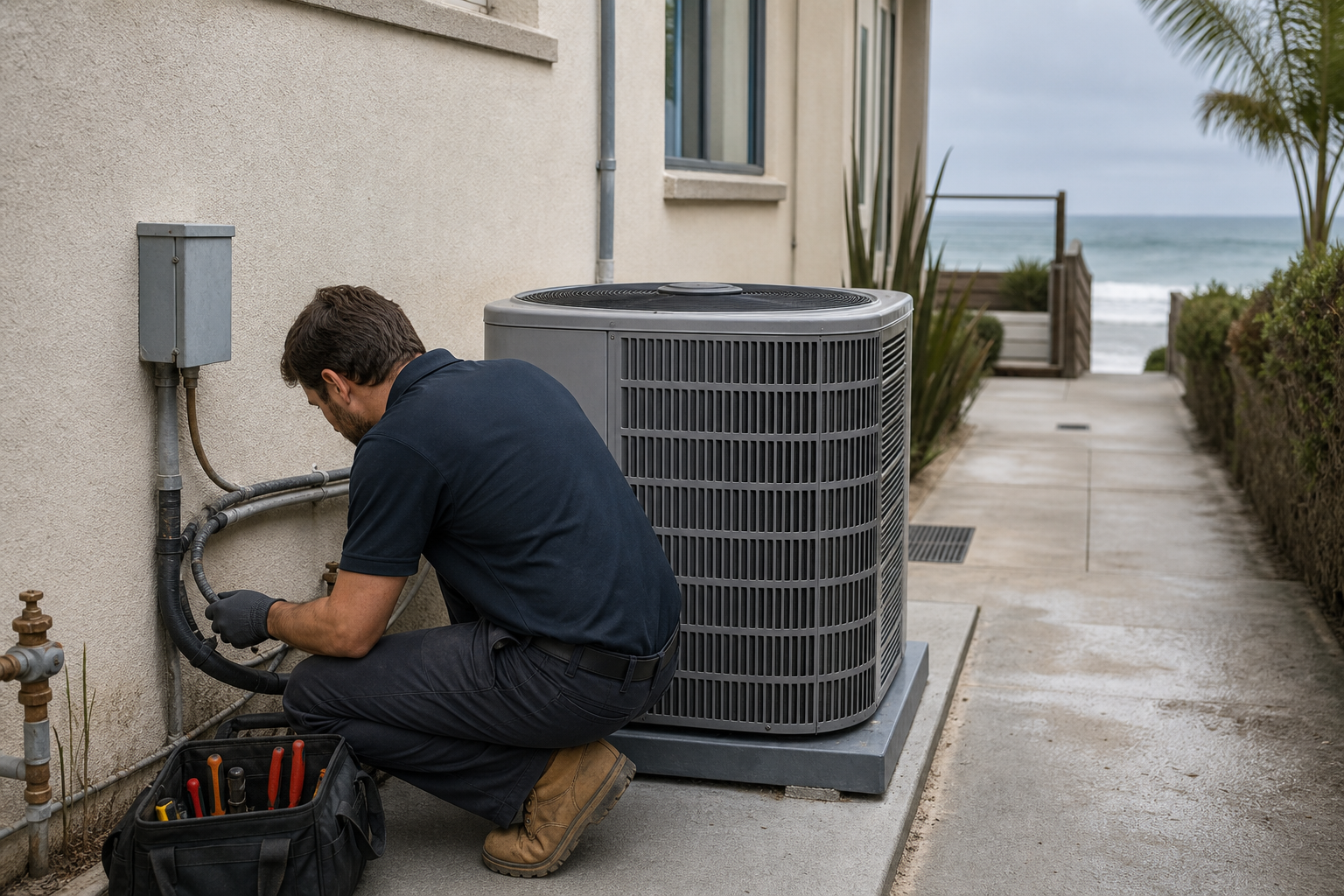
furnace repair in Rolling Hills — the practical version
Most Rolling Hills furnace repair surprises happen because the booking note skipped owner-rep coordination or did not mention drain access limits. The fix is documentation, not a different technician.
The visible issue is usually one of these: gas odor, failed ignition, cracked or suspect heat exchanger symptoms. The job changes when the property adds gate clearance, long driveways, private-road rules on top. Custom mechanical rooms in particular often need a different approach than the standard service template.
If you only read one paragraph
For furnace repair in Rolling Hills, document furnace location, filter size, error code photo and call out drain access limits, blower motor failure, and owner-rep coordination when you book. Those four pieces of information let the technician arrive with the right parts and a realistic time estimate.
What changes about this service in Rolling Hills
Local anchors near large estates, housing stock that includes large estates, detached equipment areas, guest houses, and the Palos Verdes Peninsula cluster's typical exposure to long circuit runs all affect how furnace repair actually plays out. Rolling Hills pages should be access and planning heavy, with fewer generic emergency promises.
Utility lens: Palos Verdes Peninsula homes commonly require SCE and SoCalGas verification plus extra attention to hillside access, long utility runs, and coastal exposure. Permit lens: Rolling Hills access rules and local authority requirements should be verified before scheduling permanent work. For furnace repair, the general rule is: Simple repairs can be diagnostic, but gas, venting, appliance replacement, or combustion-safety scopes may require code-compliant work and inspection. A like-for-like repair, a replacement, a relocation, and a remodel-linked alteration each follow different inspection paths.
Common failure modes for furnace repair here
Watch for cascading failures: gas odor leads to failed ignition, which then exposes long circuit runs. The right diagnostic stops at the original cause instead of just patching the visible part.
Coastal LA homes also share a few patterns worth naming explicitly: a cooling complaint can be airflow, condensate, electrical, or corrosion before it is refrigerant; a panel or circuit issue can be load, grounding, water exposure, or future-equipment capacity; a plumbing problem can be local, shared, hidden under a slab, inside a wall, or tied to public/private sewer responsibility. The diagnostic order matters.
Safety floor
If you smell gas, see arcing, find water near the panel, hear breaker trips repeating, or see a tank leaking from the body of the water heater, stop using the system. Call the utility (gas), 911 (active fire/electric risk), or a licensed contractor before continuing. Saving a service-call fee by working through an active hazard is the kind of decision that turns a $400 repair into a five-figure restoration.
Rolling Hills field memo for furnace repair
gated estates, long drives, equestrian lots, detached equipment, and hillside utilities make access verification the first job. A common scenario for this service in Rolling Hills: custom mechanical rooms near gated roads with long driveways and cracked or suspect heat exchanger symptoms. That kind of detail changes how Bayline schedules the visit, what equipment goes on the truck, and how long the appointment is blocked for.
Gate rules, private roads, long utility runs, water pressure, and service staging can control the visit window. The most common mistake homeowners make: treating a coastal corrosion pattern like an inland wear pattern. A stronger booking note describes the failure, the equipment location, who controls access, whether the symptom is active right now, and which connected systems could be affected.
Furnace Repair field playbook for Rolling Hills
- Do not treat gas heat as a comfort-only call. Check odor, ignition, venting, flame pattern, blower operation, limit trips, and combustion safety symptoms.
- Escalate when there is gas odor, rollout, blocked venting, repeated limit trips, or water damage near the furnace.
- Quote risk rises when repair becomes appliance replacement, gas connector work, vent correction, or electrical/control troubleshooting.
The first ten minutes of the visit should answer four things: is the work safe to continue, is access clear, is the symptom isolated to one component, and does gas shutoff location or drain access limits change the scope. Skipping any of those creates the conditions for an expensive surprise mid-job.
Decision evidence for furnace repair in Rolling Hills
Specific things to capture and why each one changes how the job is priced and scheduled.
| Evidence | What to capture | Why it changes the job |
|---|---|---|
| Equipment evidence | Useful evidence includes gate access, driveway route, equipment pad, panel and shutoff locations, and whether escorts or owner reps are required. | Decides whether furnace repair stays diagnostic or expands into replacement, permit, or multi-trade work. |
| Local access friction | Gate rules, private roads, long utility runs, water pressure, and service staging can control the visit window. | Affects arrival timing, parts staging, and whether a second trade has to be brought in mid-job. |
| Service-specific first check | Do not treat gas heat as a comfort-only call. Check odor, ignition, venting, flame pattern, blower operation, limit trips, and combustion safety symptoms. | Catches the wrong-first-fix mistake that turns a $300 visit into a $1,500 callback. |
| Escalation trigger | Escalate when there is gas odor, rollout, blocked venting, repeated limit trips, or water damage near the furnace. | Marks the line where a routine repair becomes an emergency, replacement, or permit project. |
| Where the quote actually moves | Quote risk rises when repair becomes appliance replacement, gas connector work, vent correction, or electrical/control troubleshooting. | Separates a real estimate from a low anchor that grows after the technician is on site. |
Questions to answer before booking
- Which utility serves your exact address (LADWP, SCE, SoCalGas), and does that change part availability or coordination time for furnace repair?
- Does Rolling Hills route this scope through the city building department, LA County, an HOA architectural committee, or a building manager?
- Is the work like-for-like repair, a replacement, a relocation, or tied to a remodel that triggers code upgrades?
- Could the visible issue involve another trade (electrical capacity, gas line sizing, venting, drainage, water damage) that needs to be planned in the same visit?
Each unclear answer is a place where the quote can move after the technician is on site. Furnace Repair is straightforward when gate clearance is documented, failed ignition is identified, and venting condition is accounted for in advance.
Cost drivers for furnace repair in Rolling Hills
The label is the same in every city. The price is not. These are the variables that actually move the number.
| Driver | Why it changes the price in Rolling Hills | What to send when booking |
|---|---|---|
| safety testing | In Rolling Hills, gate clearance or long circuit runs typically interacts with safety testing, changing parts choice, labor time, or whether a permit applies. | furnace location, plus a note on who controls access (you, HOA, building manager, landlord). |
| part access | In Rolling Hills, long driveways or water pressure variation typically interacts with part access, changing parts choice, labor time, or whether a permit applies. | filter size, plus a note on who controls access (you, HOA, building manager, landlord). |
| venting condition | In Rolling Hills, private-road rules or equipment exposure typically interacts with venting condition, changing parts choice, labor time, or whether a permit applies. | error code photo, plus a note on who controls access (you, HOA, building manager, landlord). |
| gas shutoff location | In Rolling Hills, water pressure review or backup readiness typically interacts with gas shutoff location, changing parts choice, labor time, or whether a permit applies. | gas shutoff access, plus a note on who controls access (you, HOA, building manager, landlord). |
| age of furnace | In Rolling Hills, owner-rep coordination or drain access limits typically interacts with age of furnace, changing parts choice, labor time, or whether a permit applies. | symptom timing, plus a note on who controls access (you, HOA, building manager, landlord). |
Repair, replacement, or inspection?
The repair-vs-replace math: if the repair cost passes 30% of replacement cost, replacement usually wins on total ownership. In Rolling Hills, factor in another 10-15% for accelerated wear from long circuit runs when modeling the next 5 years.
Inspection-only work is useful before a sale, a remodel, an insurance claim, or any project that touches multiple trades. The deliverable is a written list of what works, what is failing, what is unsafe, what would trigger code upgrades, and what other trades need to be involved. It is the cheapest way to avoid surprise scope on the next contractor visit.
What goes wrong when the scope is guessed
Guessing is how the wrong-sized equipment ends up on the truck, how a corroded circuit gets missed until it fails on the hottest day, how the HOA denies an exterior install after it is already complete, or how a permit fails inspection because a connected detail was overlooked. In Rolling Hills, the risk is higher when rolling hills pages should be access and planning heavy, with fewer generic emergency promises. The booking note should include furnace location, filter size, error code photo, gas shutoff access, symptom timing plus whether gate clearance or long driveways changes the timing.
Send details for furnace repair in Rolling Hills.
The scheduler should include symptoms, photos, urgency, access, and whether another HVAC, electrical, or plumbing system may be involved.
Rolling Hills neighborhoods we serve
Each pocket has its own access patterns, equipment age, and exposure conditions. The same service call plays out differently from one block to the next.
Inside the gates (private roads)
all access requires guard-house clearance and resident escort; first-visit scheduling adds 30-60 min overhead.
Equestrian-adjacent properties
barns, guest houses, and detached equipment buildings; multi-trip projects are typical.
Our furnace repair process in Rolling Hills
The 5-step process every coastal LA job goes through. Same sequence, same standards.
- 1. Combustion safety check firstBefore diagnosing the comfort issue, technician verifies no gas leaks, no flame rollout, no cracked heat exchanger symptoms, and proper venting. Safety always precedes comfort diagnosis.
- 2. Component-level diagnosisIgniter, gas valve, blower motor, limit switch, and flame sensor are tested individually. Most furnace failures are component-specific, not whole-system.
- 3. Repair vs replacement decisionFurnaces over 15 years old with major component failure usually warrant replacement evaluation. Younger systems are typically component repairs.
- 4. Repair executionMost repairs complete in a single 60-90 min visit. Heat exchanger replacement or appliance swap is scheduled separately.
- 5. Post-repair safety verificationCombustion analysis, vent integrity check, and operational test confirm safe operation before the technician leaves.
About this guidance
Elena Park, Coastal Trades Planning Lead, oversees the field methodology behind these pages.
Elena Park coordinates HVAC, electrical, and plumbing scopes for Santa Monica Bay and South Bay homes, with field focus on salt-air corrosion, marine-layer moisture, condo and HOA access, narrow side yards, panel capacity for heat pumps and EV chargers, tankless and tank water-heater constraints, sewer and drain access, and permit-aware multi-trade planning.
Related decisions
Furnace Repair service pageFurnace repair should treat gas odor, flame rollout, and venting problems as safety issues.Rolling Hills service areaRolling Hills pages should be access and planning heavy, with fewer generic emergency promises.AC Repair vs Replacement Near the Marine LayerWhen coastal corrosion, ducts, refrigerant transition, and electrical readiness push a repair toward replacement.Coastal home services glossaryPlain-English definitions for the technical terms used on this page.AC Repair in Rolling Hillsdiagnose coastal no-cooling, weak airflow, frozen coils, noisy condensers, and electrical startup issuesAC Replacement in Rolling Hillscompare repair versus replacement when marine-layer corrosion, old refrigerant equipment, ducts, and electrical capacity change the mathHeat Pump Installation in Rolling Hillsplan efficient heating and cooling with panel capacity, duct condition, equipment placement, and coastal corrosion in mindDuctless Mini-Split Installation in Rolling Hillsadd cooling and heating where ducts, additions, garages, ADUs, or coastal condos make central HVAC impracticalFurnace Repair in Rolling Hills Estatespeninsula city with townhomes, estates, and hillside service constraints. Primary concern: panel capacity.Furnace Repair in Rancho Palos Verdeslarge hillside coastal city with long drives, terrain, and equipment exposure. Primary concern: corrosion.Furnace Repair in Palos Verdes Estatesluxury hillside coastal city with access, corrosion, and finish-protection concerns. Primary concern: corrosion.Furnace Repair in Lomitasmaller South Bay city with older homes and practical repair demand. Primary concern: old panels.Furnace Repair in Walteriasouth Torrance neighborhood near hills with older homes and salt-air influence. Primary concern: duct leakage.
FAQ
Short answers for homeowners comparing urgency, access, price, and inspection risk.
How fast should I book furnace repair in Rolling Hills?
Book within 24 hours if the symptom involves gas odor or failed ignition. In Rolling Hills, urgency also rises when drain access limits could affect safety, damage, or connected systems. Same-day response is available for active leaks, gas odor, wet electrical equipment, or no-cooling situations during heat warnings.
What should I prepare before booking furnace repair in Rolling Hills?
Five photos: a wide shot of the equipment, the data plate, the panel or shutoff, the access path, and any visible corrosion or staining. Plus furnace location, filter size, error code photo. For Rolling Hills, also confirm gate clearance, long driveways, private-road rules and who controls access.
What drives furnace repair cost in Rolling Hills?
Major drivers: safety testing, part access, venting condition, gas shutoff location, age of furnace. Local cost moves when owner-rep coordination, drain access limits, or coastal wind slows access or expands scope. The planning range is $250 to $2 100; final cost depends on diagnosis and connected-trade scope.
Does furnace repair in Rolling Hills require permits?
Simple repairs can be diagnostic, but gas, venting, appliance replacement, or combustion-safety scopes may require code-compliant work and inspection. Local authority: Rolling Hills access rules and local authority requirements should be verified before scheduling permanent work
Which Rolling Hills neighborhoods do you serve for furnace repair?
Bayline covers the entire city including Inside the gates (private roads); Equestrian-adjacent properties.
Is the diagnostic fee separate from repair cost?
Yes. The $185 diagnostic fee is applied as credit toward any approved repair work performed in the same visit. Emergency rates apply outside business hours.
What's a realistic timeline for furnace repair from booking to completion?
Most diagnostic visits happen within 48 hours of booking. Component repairs typically complete in the same visit. Replacement work with permits takes 1-3 weeks from quote acceptance to final inspection, depending on city and equipment availability.
What happens if the technician finds something unexpected?
The technician stops, photographs the issue, and provides a written quote for the additional scope before any extra work begins. Original quote remains binding for the original scope.
How do I know if my AC needs repair or replacement?
If repair cost exceeds 30% of replacement cost or the unit is over 12 years old, replacement is usually the better total-cost decision. We provide both quotes when the math is close.
Recent furnace repair reviews from coastal LA
Verified visible reviews. The same review text is referenced in this page's structured data.
★★★★★
Condo, dishwasher leak that had been ruining the cabinet base for months. Bayline traced it to a slow drip from the inlet valve, replaced it with a quarter-turn shutoff (the old one had seized), and the disposal cord we were about to fix on our own. Saved us two trips.
★★★★★
Storm season, exterior junction box flooded behind a planter. Bayline came out same day, cut power safely, replaced the box with a proper in-use cover, and re-routed conduit so it drains away from the wall. Peace of mind.
★★★★★
Strand-area home, narrow access, finicky HOA-equivalent neighbor relations. Bayline scheduled the AC replacement on a weekday morning to minimize street disruption, and even checked in with the neighbor about the small crane delivery. Class act.
Authoritative references used
These pages inform permit, utility, safety, equipment, water, sewer, and efficiency context. Exact requirements still depend on address and final scope.
LADBS plan check and permit
City of Los Angeles addresses can require LADBS context for mechanical, electrical, plumbing, and building-safety scopes.
LADBS express permits
Some simple residential MEP scopes may be eligible for streamlined permit handling, while replacements and alterations need address-specific review.
LADBS inspections
City of Los Angeles MEP work can require trade inspection sequencing before work is covered, energized, or finalized.
Los Angeles County Building and Safety
Unincorporated coastal areas and county-served pockets may use LA County Building and Safety workflows.
LADWP residential electric service
Los Angeles neighborhoods such as Venice, Westchester, Playa del Rey, Brentwood, Pacific Palisades, and parts of the Westside can involve LADWP.
Southern California Edison residential services
Many South Bay and beach-city addresses use SCE electric service, relevant to panels, EV chargers, heat pumps, and outages.
SCE Charge Ready Home
EV charger planning can involve panel capacity, load management, utility coordination, and rebate eligibility.
SoCalGas natural gas leak safety
Gas odor and gas-appliance safety are urgent for furnaces, water heaters, dryers, ranges, and gas-line concerns.
California Energy Commission building energy standards
California energy standards affect HVAC replacement, heat pumps, duct work, and electric-ready planning.