Emergency Shutoff Guide for Coastal Leaks, Gas Odor, Wet Panels, and No-Cooling Calls
How to stabilize urgent HVAC, electrical, and plumbing failures while avoiding unsafe actions.
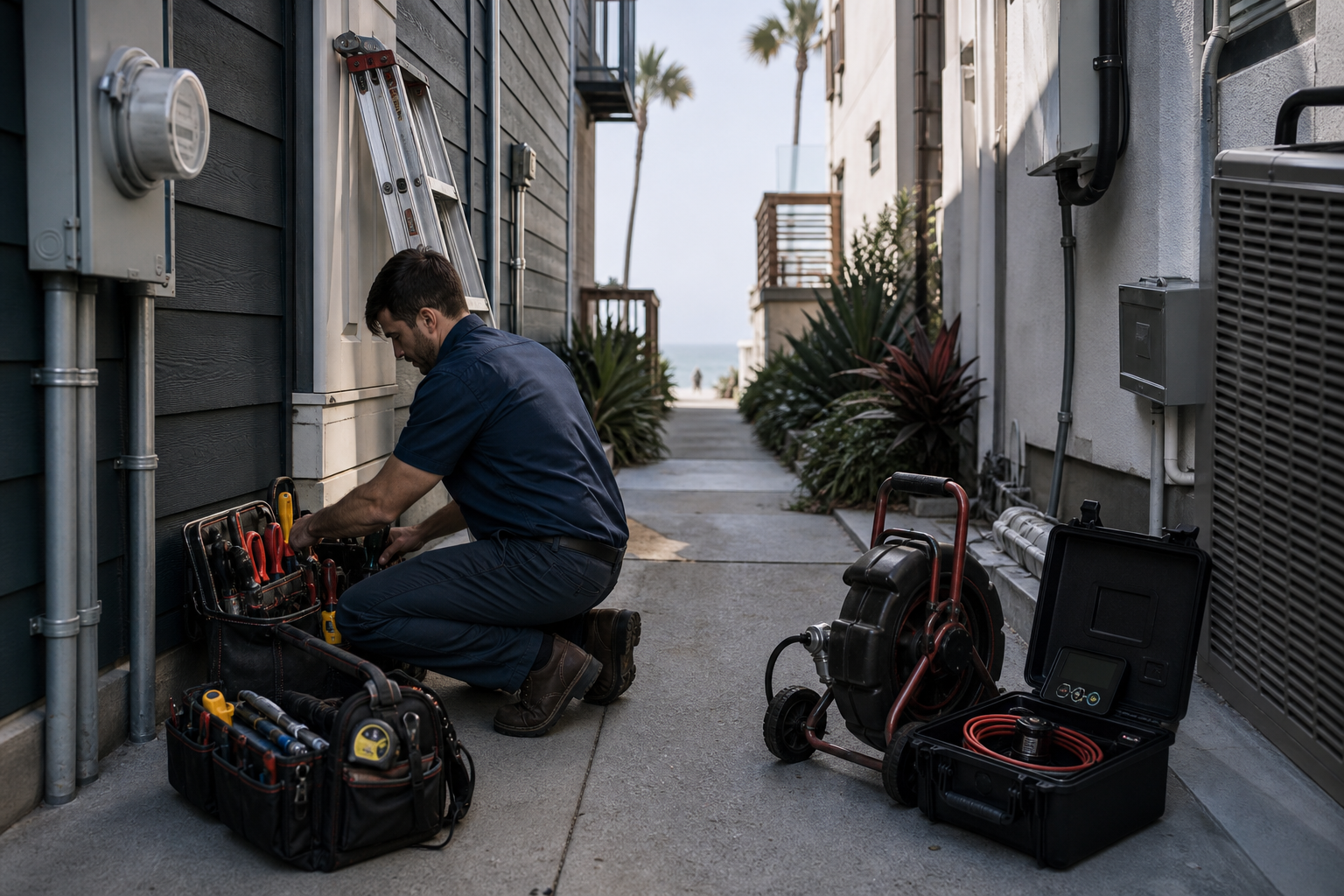
Quick takeaway. When in doubt, shut it down. The 30 seconds it takes to kill a breaker, close a gas valve, or turn off the main water can prevent thousands of dollars in damage.
Why this matters on the coast
Coastal Los Angeles homes fail differently than inland homes. Salt air strips zinc off galvanized fasteners in months instead of decades. Marine-layer humidity feeds the corrosion overnight, then dries it back into a salt crust the next afternoon. Tight lots, narrow alleys, gated drives, and HOA-controlled garages add another layer: a job that takes two hours in a Torrance ranch can take a full day in a Venice walk-street duplex because the truck has to park three blocks away. How to stabilize urgent HVAC, electrical, and plumbing failures while avoiding unsafe actions.
A field sequence that catches connected problems
Elena Park's sequence on a first visit: identify the visible symptom; verify safety (gas, water near electrical, active leaking, smoke); map access including parking, gates, elevators, and shutoff locations; photograph data plates, panel labels, and corrosion; check the connected systems (a tankless install pulls in gas line sizing, electrical outlet, condensate routing, and venting in the same conversation); separate repair from replacement based on age, parts availability, code requirements, and what the home actually needs over the next five years.
Three shutoffs every household should know
Main water shutoff: usually outside the house in a curb box near the street; needs a special key or wrench. Gas shutoff: at the meter, usually outside; turns 90 degrees with a wrench. Main electrical disconnect: in or beside the panel; the largest breaker turns off the whole house.
What you can safely do, and what to leave alone
Safely: turn off water, close gas at the meter, shut off the main breaker, evacuate if you smell gas or see fire. Don't: try to find a leak with a flame, touch a wet electrical panel, or open a sealed gas appliance. After containing, call utility (gas), 911 (fire/severe risk), or a licensed contractor.
When to stop using the system immediately
Some symptoms are not a "schedule a visit" call — they are a "shut it down now" call: gas odor; hot or smoking outlets, switches, or panels; water dripping near electrical equipment; arcing or sparking devices; smoke or burning smell from HVAC equipment; sewage backing up into living space; a water-heater tank leaking from the body (not just a fitting); and any combustion appliance making a sound that is unfamiliar. In those cases call SoCalGas (gas), 911 (fire/electric shock risk), or a licensed contractor before doing anything else. Skipping containment to save a service-call fee can turn a $400 repair into a $40,000 restoration.
What to document while waiting for help
Photograph the source if safely visible. Note the time you turned off utilities. Track water damage to walls and ceilings. If a tenant is involved, document the communication. This information helps insurance, contractors, and (if needed) building management.
How this guide applies to your neighborhood
The patterns above show up differently in different coastal pockets. Older Westside homes (Brentwood, Palisades) often have main shutoffs in unexpected locations from past remodels. South Bay and beach cities: meter and main are usually street-side and accessible. Hillside Palos Verdes: long supply runs from the meter mean the house-side shutoff is often in a different spot.
Linked service paths
- Emergency HVAC — handle no cooling, burning smells, water around equipment, gas-heat concerns, and failures during coastal heat swings.
- Emergency Electrical Repair — respond to burning smell, partial outage, wet panel, tripping breaker, sparking device, and unsafe exterior equipment.
- Emergency Plumbing — stabilize active leaks, backups, water-heater failures, sewer overflows, failed shutoffs, and water near electrical systems.
Source notes
This guide is built on official permit, utility, safety, equipment, energy, water, sewer, and manufacturer references. Final requirements still depend on the exact address and scope.
Local pages to compare
Santa Monicacoastal city with condos, older apartments, bungalows, and strict local permit expectations. Risk: salt-air corrosion.North of Montanahigh-value Santa Monica residential pocket with large remodels and older utility constraints. Risk: corroded exterior hardware.Ocean Parkdense beach-adjacent neighborhood with older rentals, condos, and narrow alleys. Risk: salt corrosion.Sunset Parkinland Santa Monica neighborhood with older homes and airport-adjacent airflow concerns. Risk: dust-loaded coils.Brentwoodlarge-home and condo market with high replacement expectations and LADWP context. Risk: old duct systems.Pacific Palisadescoastal hillside market with rebuilds, canyon access, and utility planning pressure. Risk: salt-air corrosion.Rustic Canyoncanyon neighborhood with older homes, trees, and tight access. Risk: sewer roots.Malibucoastal and hillside city with ocean exposure, long drives, and local building-safety constraints. Risk: severe corrosion.
FAQ
Short answers for homeowners comparing urgency, access, price, and inspection risk.
Who wrote this guide?
Elena Park, Coastal Trades Planning Lead, wrote this guide from a coastal field-planning perspective.
Does this replace an inspection?
No. It helps homeowners prepare better questions and photos before a qualified field visit.
What should I do next?
Use https://nexfield.pro/crm/book?u=205 with photos, symptoms, access rules, and the service pages linked below.
What Coastal LA Homeowners Say
Verified visible reviews. The same review text is referenced in this page's structured data.
★★★★★
Highland Ave place, classic surf-shack architecture, AC mounted on a tiny side patio that gets hammered by salt spray. Bayline talked us through moving the new condenser to a slightly more protected spot 8 feet over. Made a difference. Three months later, no corrosion start.
★★★★★
Older duplex near Ballona Creek. Constant moisture issues, GFCIs popping. Bayline found a leak in the laundry wall causing the wiring to wick water. Fixed both — plumber and electrician on the same crew. Coordinated billing, single invoice.
★★★★★
Off-the-beaten-path canyon home. They confirmed which utility actually serves us (it's complicated), figured out our well-pressure switch was the real issue, replaced it, and didn't sell us a whole pump. $400, problem solved.
Authoritative references used
These pages inform permit, utility, safety, equipment, water, sewer, and efficiency context. Exact requirements still depend on address and final scope.
LADBS plan check and permit
City of Los Angeles addresses can require LADBS context for mechanical, electrical, plumbing, and building-safety scopes.
LADBS express permits
Some simple residential MEP scopes may be eligible for streamlined permit handling, while replacements and alterations need address-specific review.
LADBS inspections
City of Los Angeles MEP work can require trade inspection sequencing before work is covered, energized, or finalized.
Los Angeles County Building and Safety
Unincorporated coastal areas and county-served pockets may use LA County Building and Safety workflows.
LADWP residential electric service
Los Angeles neighborhoods such as Venice, Westchester, Playa del Rey, Brentwood, Pacific Palisades, and parts of the Westside can involve LADWP.
Southern California Edison residential services
Many South Bay and beach-city addresses use SCE electric service, relevant to panels, EV chargers, heat pumps, and outages.
SCE Charge Ready Home
EV charger planning can involve panel capacity, load management, utility coordination, and rebate eligibility.
SoCalGas natural gas leak safety
Gas odor and gas-appliance safety are urgent for furnaces, water heaters, dryers, ranges, and gas-line concerns.
California Energy Commission building energy standards
California energy standards affect HVAC replacement, heat pumps, duct work, and electric-ready planning.
California Energy Commission 2025 Energy Code
The 2025 Energy Code applies to permits submitted on or after January 1, 2026, making heat-pump, electric-ready, ventilation, and verification context relevant.
California HERS Program
HVAC alterations can trigger HERS or energy-code verification, especially around duct leakage and equipment changes.
ENERGY STAR heating and cooling
Filter condition, duct leakage, maintenance, and right-sized equipment affect comfort and efficiency.
Turn the guide into a real job note.
Send photos, city, access, and urgency through the approved external booking link.